





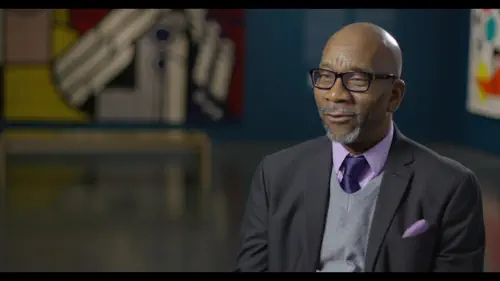
C. L. Harding’s work inhabits the space
between interior and exterior
experience—where perception, memory, and
imagination quietly converge. Visually
impaired from birth, Harding approaches
color, form, and perspective in ways that
challenge conventional expectations, allowing
intuition and sensation to guide the work
rather than optical certainty. The resulting
images offer an alternative way of seeing, one
rooted in lived experience rather than literal
representation.
Drawing from the legacies of artists such as
Kandinsky, Dal, and Man Ray, Harding creates
dreamlike, fanciful compositions that move
fluidly through past, present, and future.
Works are often developed from small
sketches, though at times they emerge
directly on a larger scale. Themes of solitude
recur throughout the practice—solitude
understood not as loneliness, but as a
reflective, generative state. Using relatively
simple materials including acrylics, gouache,
markers, pencil, and pastel, Harding employs
a range of tools—brushes, palette knives,
sponges, fingers, and cloth—to build layered
surfaces and evocative imagery that invite
contemplation and quiet discovery.
Copyright 2026 Lowen Road Productions
All Rights Reserved


C. L. Harding’s work inhabits the
space between interior and exterior
experience—where perception,
memory, and imagination quietly
converge. Visually impaired from
birth, Harding approaches color,
form, and perspective in ways that
challenge conventional expectations,
allowing intuition and sensation to
guide the work rather than optical
certainty. The resulting images offer
an alternative way of seeing, one
rooted in lived experience rather
than literal representation.
Drawing from the legacies of artists
such as Kandinsky, Dal, and Man Ray,
Harding creates dreamlike, fanciful
compositions that move fluidly
through past, present, and future.
Works are often developed from
small sketches, though at times they
emerge directly on a larger scale.
Themes of solitude recur throughout
the practice—solitude understood
not as loneliness, but as a reflective,
generative state. Using relatively
simple materials including acrylics,
gouache, markers, pencil, and pastel,
Harding employs a range of
tools—brushes, palette knives,
sponges, fingers, and cloth—to build
layered surfaces and evocative
imagery that invite contemplation
and quiet discovery.
Copyright 2026 Lowen Road Productions All Rights Reserved
Copyright 2026 Lowen Road Productions
All Rights Reserved